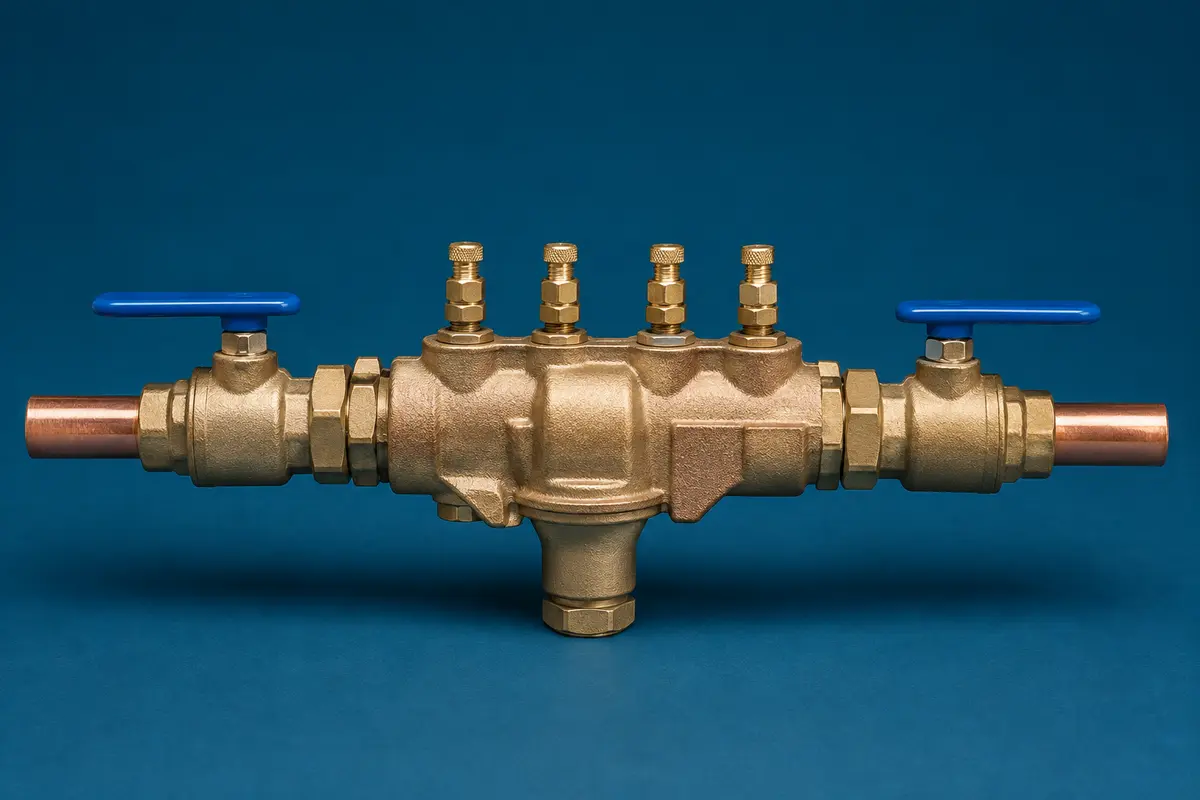
Quick answer: Backflow prevention stops contaminated water from flowing backward into the public drinking supply. Pennsylvania requires public water systems — including those serving Montgomery County — to run cross-connection control programs, and any backflow prevention assembly on a residential service line must be tested by a certified tester at least once a year. Your water utility sets the calendar, the deadlines, and the data manager; this page explains the concept, the credentialing, and what to expect when you book.
At a glance
- What it is. A testable one-way valve assembly (commonly a reduced-pressure-zone, double-check, or pressure vacuum breaker) installed where non-drinking water could otherwise be pulled or pushed back into the supply. 12
- Why it matters. A failed or missing device is a public-health risk, not just a paperwork problem. 34
- Who can test it. A certified backflow tester — typically ASSE 5110 — using a calibrated differential-pressure gauge kit. A general plumbing license is not the same credential. 5
- How often. At least once a year in Pennsylvania; your utility may set a more specific deadline. 67
- What you can do at home. Avoid creating cross-connections, drain or insulate outdoor devices before freezing weather, and keep your own records of test reports. 78
What “backflow” actually means
Drinking water is supposed to flow one way: from the utility’s main into your home, and out through your fixtures. Two situations can reverse that flow:
- Backsiphonage. A drop in pressure on the supply side — a water main break, a hydrant being opened down the street, or heavy firefighting use — can create a partial vacuum that pulls water backward through your plumbing.
- Backpressure. Something on your property pushes water backward into the supply. A boiler, an irrigation pump, or an elevated storage tank can create downstream pressure higher than supply pressure.
The place where contaminated water could enter the drinking supply is called a cross-connection: any actual or potential physical link between the potable water system and a non-potable source. A garden hose left in a pool, a fertilizer sprayer, or a pet’s water bowl is a classic cross-connection. A lawn irrigation system is one of the most common residential cross-connections, which is why so many of the testing notices go to homes with sprinklers. 14
A backflow prevention assembly is a testable mechanical device — usually built around one or more check valves — that allows water to flow in only one direction. Different device types provide different levels of protection. A reduced-pressure-zone (RPZ) assembly is built for high-hazard connections. A double-check valve assembly (DCVA) and a pressure vacuum breaker (PVB) are typically used for lower-hazard situations such as residential irrigation. Which device is required at any given property is a determination made by the water utility’s cross-connection survey, not a generic rule. 21
When homeowners end up scheduling this service
A handful of situations reliably bring a homeowner to a backflow tester:
- A testing notice from the water utility. Pennsylvania requires public water systems to operate cross-connection control programs, and covered devices are tested at least annually. The state sets the minimum; your utility sets the calendar. 64
- A lawn irrigation system. Whether you installed it yourself or inherited it with the house, the irrigation tap is one of the most common residential cross-connections in Pennsylvania. 39
- Other non-potable connections. Fire sprinkler systems, boilers, and pool-fill lines are situations where a backflow preventer is commonly required. 3
- Visible discharge from the device. A reduced-pressure-zone assembly has a relief valve that may drip occasionally. A continuous stream, or any discharge from a device that is not supposed to discharge, usually signals debris on a check valve or a relief valve that can no longer reseat. 10
- Lower pressure or visible wear. Mineral buildup, freeze damage, or aging internal parts can affect how the device operates. 10
- A real-estate transaction. Buyers, sellers, and settlement companies sometimes ask that devices be tested as part of a home sale.
How a certified tester diagnoses the device
This is not a do-it-yourself task. Pennsylvania’s testing requirement is built around a credentialed tester using a calibrated differential-pressure gauge kit. A general plumbing license is not the same credential. The widely accepted national certification is ASSE 5110, which documents field experience, a multi-day training course, and a written and practical exam. 5
A typical field test:
- The tester identifies the device, its make and model, and confirms it is on the USC Foundation’s list of approved backflow prevention assemblies. Devices on that list have been evaluated for use; using an unlisted assembly is generally not allowed. 11
- The tester connects a differential-pressure gauge kit to the test ports and runs the checks defined by the device’s standard. Each check valve is tested for tightness, and the relief valve (on an RPZ) is verified to open at the correct differential pressure and reseat cleanly.
- Pass or fail is recorded on the utility’s test report form. Pennsylvania American Water uses BSI Online; North Penn Water Authority uses a different administrator. The tester — or the homeowner — keeps a copy. 412
If the device fails, the tester identifies which component is at fault: a check valve that will not hold pressure, a relief valve that will not reseat, or worn seals. From there, the path forward is usually repair (rebuilding the device with replacement parts) followed by a re-test, or replacement if the device is too worn or damaged to rebuild. 105
What a service visit typically looks like
Most annual tests are short visits. The tester arrives, locates the device (often outside, sometimes in a basement meter room or a recessed pit), performs the gauge test, and submits the report. If the device passes, you are done until the next notice.
If the device fails, the conversation gets longer. A certified repairer — held to ASSE 5130 standards in many programs — or a licensed plumber working under the utility’s rules can rebuild the device on-site or recommend replacement. Replacement adds another consideration: the new device has to be a model on the approved list, installed in a location that protects it from freeze damage, and tested before it is placed back in service. 115
What shapes the scope of the work
The variables that actually drive a backflow job:
- Device type. A residential irrigation PVB is a simpler piece of equipment than a high-hazard RPZ on a commercial fire line. The test procedures and the rebuild effort differ. 2
- Location. Above-grade outdoor installations are easier to service than devices in meter pits, vaults, or tight indoor mechanical rooms, and accessibility affects how long the visit takes. 1
- Condition. A device that has never been winterized may have freeze damage that pushes the work from a repair to a replacement.
- Freeze exposure. Montgomery County winters are hard on unprotected outdoor devices. An insulated enclosure, heat trace, or a properly executed drain-down before a hard freeze is standard practice for above-ground assemblies. 813
- Plumbing context. Older systems may lack an isolation valve upstream of the device, which complicates winterization and can affect how a repair is performed. 13
- Utility program details. The data manager (BSI Online, VEPO, or another administrator), the submission deadline, and the format of the test report are utility-specific. Your utility’s website is the source of truth for those details. 412
This page does not estimate prices, because no responsible estimate can be made without knowing the device, the location, the utility, and the local permit rules.
Questions worth asking a tester or contractor
Before you book, a short list of questions protects you:
- Are you ASSE 5110-certified to test backflow assemblies? A general plumbing license does not substitute for backflow tester certification. 5
- If repairs are needed, do you hold ASSE 5130 certification, or do you work under a licensed plumber?
- Which data manager does my utility use, and will you submit the report directly? Knowing this lets you confirm the test got recorded. 412
- What device do I have, and what hazard level is it protecting? The answer should be specific, not generic.
- If the device fails, which part failed, and what are my options — repair or replacement?
- Is the device protected from freezing, and is there an upstream isolation valve?
- Can I get a copy of the test report for my own records?
If a prospective contractor is evasive about certification, the data manager, or the report, treat that as a signal to keep looking.
Maintenance and prevention where the evidence supports it
The maintenance story here is simple and well-defined:
- Test annually. Pennsylvania regulations require backflow prevention assemblies to be tested at least once a year. Your utility may set a more specific deadline or reminder cycle. 67
- Winterize before freezing weather. Drain or insulate outdoor assemblies. If you are not sure how your system was plumbed, this is a job for a professional — the wrong valve sequence can trap water in the device and cause it to split when it freezes. 8
- Avoid creating new cross-connections. Don’t leave a hose submerged in a pool, a bucket, or a chemical container. Keep tank water levels below the faucet or inlet. 7
- Use approved assemblies. If you are replacing or installing a new device, make sure the model is on the USC Foundation’s current list of approved backflow prevention assemblies. 11
- Keep your own records. The utility tracks your compliance, but a personal file of test reports and repair invoices is useful if you sell the house or need to dispute a notice. 13
Safety boundaries
Hard rules from the research and source material:
- Do not test, repair, or rebuild a backflow preventer yourself. The work requires a certified tester with a calibrated gauge kit, and a certified repairer for component-level work. 5
- Do not bypass, remove, or cap the device to stop a leak. A disabled backflow preventer is an unprotected cross-connection — a public-health risk, not just a paperwork problem. 34
- Do not plug a discharging RPZ relief valve. A relief valve that is discharging is sending a signal; plugging it removes the protection that signal represents. 10
- Do not assume freeze protection is automatic. Improperly closed valves can trap water in the device and cause a split body when temperatures drop. 138
- Do not use an unapproved assembly. The USC Foundation’s approved list exists for a reason. 11
Montgomery County–specific notes
Montgomery County is served by multiple water utilities — Aqua Pennsylvania, Pennsylvania American Water, North Penn Water Authority, and several smaller municipal authorities — and each one runs its own cross-connection program with its own deadlines, data manager, and submission rules. The Pennsylvania regulation (25 Pa. Code § 109.709) sets the state-level baseline, but the day-to-day administration is utility-by-utility. Before scheduling a test, confirm which utility serves your address and pull that utility’s current program page. 6412
A few specific items that vary and are worth verifying for your address:
- The exact annual testing deadline and reminder cycle.
- Whether the utility enforces testing on residential irrigation accounts or focuses enforcement on commercial and industrial accounts.
- Whether your municipality requires a plumbing permit for new installations or replacements. Permit requirements in Montgomery County are set at the borough and township level and are not uniform across the county.
- The specific device type your utility requires at your hazard level. This is determined by the utility’s cross-connection survey, not a generic rule. 1
This page does not assert any of those specifics, because they vary. Your utility’s website and your municipality’s code office are the authoritative sources.
Frequently asked questions
Why did I get a letter about backflow testing? Pennsylvania requires public water systems to operate cross-connection control programs. If your service line has a backflow preventer, your utility is required to make sure it is tested at least annually. 64
How often does my device need to be tested? At least once a year in Pennsylvania. Your utility may impose a more specific deadline. 67
Who can test my device? A certified backflow tester — typically ASSE 5110 — using a calibrated gauge kit. A general plumbing license is not the same credential. 5
What is the difference between RPZ, DCVA, and PVB? Different device types for different hazard levels. RPZ assemblies protect against high-hazard connections; double-check assemblies and pressure vacuum breakers protect lower-hazard situations such as residential irrigation. Your utility decides which is required at your property. 21
Why is water dripping from my device? A small drip from an RPZ relief valve during normal use can be expected. A continuous discharge, or any discharge from a device that is not supposed to discharge, usually points to debris on a check valve or a relief valve that cannot reseat. Schedule a test. 10
Do I need one for my sprinkler system? In most cases, yes. Residential irrigation is one of the most common residential cross-connections. Your utility’s cross-connection survey is what determines the requirement. 39
What happens if I don’t test it? Utilities can send reminders, escalate to formal notices, and, in some programs, follow through with service shut-off after repeated non-compliance. 64
Should I try to winterize it myself? If you know the device, know where your isolation valves are, and have done it before, many homeowners drain their own above-ground assemblies each fall. If you are not sure, hire a professional — the cost of a service visit is small compared with the cost of replacing a split device. 8
Sources
Footnotes
-
U.S. Environmental Protection Agency. Cross-Connection Control Manual. https://nepis.epa.gov/Exe/ZyPURL.cgi?Dockey=9100MH4V.TXT ↩ ↩2 ↩3 ↩4 ↩5 ↩6
-
National Fire Protection Association. Backflow Preventer Types. https://www.nfpa.org/news-blogs-and-articles/blogs/2022/10/28/backflow-preventer-types ↩ ↩2 ↩3 ↩4
-
WSSC Water. Cross-Connections and Backflow Prevention. https://www.wsscwater.com/explain-backflow ↩ ↩2 ↩3 ↩4 ↩5
-
Pennsylvania American Water. Cross Connection & Backflow Prevention. https://amwater.com/paaw/water-quality/cross-connection-backflow-prevention ↩ ↩2 ↩3 ↩4 ↩5 ↩6 ↩7 ↩8 ↩9 ↩10
-
ASSE International. Backflow Prevention (Personnel Certification). https://asse-plumbing.org/personnel-certification/backflow-prevention ↩ ↩2 ↩3 ↩4 ↩5 ↩6 ↩7
-
25 Pa. Code § 109.709 — Cross-connection control program (Cornell LII). https://www.law.cornell.edu/regulations/pennsylvania/25-Pa-Code-SS-109-709 ↩ ↩2 ↩3 ↩4 ↩5 ↩6 ↩7
-
Lycoming County Water and Sewer Authority. Backflow Prevention and Cross-Connection Control Program. https://www.lcwsa.net/lcwsa-backflow-prevention-and-cross-connection-control-program ↩ ↩2 ↩3 ↩4 ↩5
-
Texas A&M AgriLife Extension. Irrigation Winterization. https://irrigation.tamu.edu/winterization ↩ ↩2 ↩3 ↩4 ↩5
-
Texas Commission on Environmental Quality. Cross-Connection Control and Backflow Prevention. https://www.tceq.texas.gov/drinkingwater/cross-connection ↩ ↩2
-
Atlas Backflow. Why Is Water Leaking or Dripping from My Backflow Preventer? https://www.atlasbackflow.com/post/why-is-water-leaking-or-dripping-from-my-backflow-preventer-1 ↩ ↩2 ↩3 ↩4 ↩5
-
USC Foundation for Cross-Connection Control and Hydraulic Research. List of Approved Backflow Prevention Assemblies. https://fccchr.usc.edu/list.html ↩ ↩2 ↩3 ↩4
-
North Penn Water Authority. Contracted Cross-Connection Control Admin. https://npwa.org/contracted-cross-connection-control-admin ↩ ↩2 ↩3 ↩4
-
FindBackflowTesters. 7 Common Backflow Prevention Mistakes Homeowners Make. https://findbackflowtesters.com/blog/common-backflow-prevention-mistakes-homeowners ↩ ↩2 ↩3 ↩4
Related video
Cross Connections — Protecting Our Public Water System
A public-water utility explains how cross-connections can contaminate drinking water and why backflow controls matter.
Video: Cross Connections — Protecting Our Public Water System — Detroit Water and Sewerage Department.
Context and limits: General public-water education; Montgomery County utilities set their own device, testing, and reporting requirements.