If a home has had one leak, then another, then a third, and a contractor has said the system itself has reached the end of its useful life, the right next step is not another patch — it is to plan a real replacement. This page is a homeowner-facing guide to what whole-home repiping actually covers, how a qualified contractor decides it is needed, what affects the scope of the work, and the Pennsylvania- and Montgomery County–specific licensing and permit questions worth raising before any contract is signed.
Cost ranges and “typical price” figures are intentionally not included. Repipe pricing varies too widely by home, neighborhood, and material to be useful on a county-level page. A written estimate from a qualified plumbing contractor is the right place for numbers.
What “whole-home repiping” actually means
Repiping is the replacement of a home’s water distribution piping — sometimes with the drain lines as well. It is not a spot repair. A spot repair fixes one failed section; a repipe replaces the supply system that runs from the main shutoff to every fixture.
Three scopes are commonly bundled under “repiping,” and it helps to be clear on which one is actually being discussed:
- Water supply repipe. Replaces the pipes that carry pressurized potable water from the main shutoff to the fixtures — what most people mean by “repiping.”
- Drain, waste, and vent (DWV) repipe. Replaces the pipes that carry wastewater out of the home and the vent pipes that let drains breathe. Often cast iron or galvanized steel in older homes, and usually a separate, larger scope.
- Service line replacement. Replaces the pipe between the water meter (or curb stop) and the home. In Pennsylvania, the water utility — for example, Aqua — may replace lead or galvanized service lines at no direct cost to the homeowner under its own program. Service line work is separate from interior repiping and is typically handled by, or coordinated with, the utility.
When homeowners usually seek help
The homeowners who end up looking up “repiping” usually fall into one of three buckets:
- Recurring leaks in an older home. One pinhole gets repaired, then another appears months later. After the third or fourth visit, a contractor suggests the system is the problem, not the individual joints.
- Known aging or problematic pipe material. The home was built between the late 1970s and mid-1990s and contains polybutylene (“PB”) pipe, or was built earlier and contains galvanized steel, or the water utility has notified the homeowner that the service line is lead or galvanized.
- Planned renovation. The homeowner is already opening walls for a kitchen or bath remodel and decides to replace the supply lines while the walls are open — typically the cheapest time to repipe.
All three are valid triggers. The first two are reactive — something is failing. The third is proactive and usually produces a cleaner result because finish-restoration cost is shared with the remodel.
Common signs and causes
The following are symptoms that should prompt a professional assessment, not self-diagnoses:
- Recurring or multiple leaks — pinhole leaks in copper, or leaks at threaded joints in galvanized and PB systems.
- Discolored water — brown, yellow, or reddish water, often from internal corrosion.
- Low or inconsistent water pressure — flow that drops noticeably at multiple fixtures.
- Noisy pipes — banging, hammering, or creaking when fixtures are used.
- Visible corrosion — rust, flaking, or green/white crust on exposed pipe.
- Known problem material — PB pipe, galvanized steel, or a lead service line.
Underlying causes vary by material:
- Galvanized steel. Steel pipe with a zinc coating that degrades over decades. The steel rusts from the inside out, the pipe narrows, and eventually it leaks. Service life varies widely with water chemistry.
- Copper. Generally durable and corrosion-resistant, but susceptible to localized pitting and pinhole leaks under certain water chemistries. A 30-year review in AWWA Water Science notes that copper pitting remains incompletely understood — homeowners cannot reliably predict when or where it will strike.
- Polybutylene (PB). Flexible gray plastic pipe installed from the late 1970s to mid-1990s. Linked to premature failure from oxidants in municipal water, and the subject of a major class-action settlement (Cox v. Shell Oil Co., approved 1995), reported at roughly $1 billion. Both settlement funds have since been exhausted. PB is typically identified by the “PB2110” marking on the pipe.
- Lead service lines. A public-health concern addressed at the federal level by the EPA’s Lead and Copper Rule Improvements (LCRI), which require water systems to replace lead service lines within 10 years. In Pennsylvania, Aqua Pennsylvania replaces lead and galvanized service lines at no direct cost to its customers under its own program and maintains a service-line material map so customers can check the material at their address.
Knowing the pipe material in the home is the single most useful piece of information a homeowner can have when deciding whether to repipe.
How professionals diagnose
A repipe assessment is a structured walk-through, not a single test. A plumber will usually do the following:
- Identify the existing pipe material. PB is identified by gray color and the “PB2110” marking. Galvanized is identified by threaded fittings and the magnetism of steel. Copper is identified by color and soldered fittings. Service-line material is identified via the utility’s map (where available) or a scratch/magnet test.
- Count and locate failure points. Recurring leaks across multiple rooms or zones are stronger evidence of systemic failure than a single leak.
- Measure flow and pressure. Reduced flow at multiple fixtures points to internal pipe restriction, often from galvanized corrosion.
- Review water quality. Where copper pitting is suspected, pH, hardness, and chlorination levels matter; some utilities publish water-quality reports that a plumber can interpret.
- Check service-line material. For Aqua Pennsylvania customers, the utility’s online service-line material map is the first stop. For other utilities, contact the utility directly.
Diagnosis ends with a recommendation: spot repair, partial repipe, whole-home supply repipe, full DWV replacement, or service-line coordination. The right choice depends on the age, material, and condition of the existing system — not on any one symptom.
Common service and repair paths
Once diagnosis is done, the work falls into one or more of these categories. The right path depends on the existing system, not on the homeowner’s preference.
- Spot repair. Appropriate when a single, isolated failure is found and the rest of the system is sound.
- Partial repipe. Replacing a failing branch or section — a single bathroom group, a corroded run to the kitchen, a manifold serving one side of the house. Right call when failure is localized but the surrounding pipe is showing its age.
- Whole-home supply repipe. Full replacement of supply lines, typically in PEX or copper. New manifold at the main shutoff, new branch lines to every fixture, new stops and supplies at the fixtures.
- DWV (drain, waste, vent) replacement. Separate scope from supply repiping. In older homes often cast iron or galvanized steel drain pipe, replaced for reasons unrelated to the supply side (slow drains, sewer gas odor, visible corrosion at the base of stacks).
- Service line replacement. Coordinated with the water utility (for example, Aqua) rather than treated as a private contractor job, especially where the line is lead or galvanized.
A contractor recommending a whole-home repipe when the issue is one localized leak is overselling; a contractor recommending only a spot repair when the home has three pinholes in five years is under-treating.
What affects project scope
Scope varies with these factors — none of which this page converts into a price promise:
- Home size and fixture count. Number of bathrooms, kitchens, laundry hookups, hose bibbs, and outdoor fixtures.
- Number of stories and access. Slab-on-grade, basement, crawlspace, or attic — each affects routing and wall-opening decisions.
- Existing pipe material and condition. How much of the old system must be removed and how the new system must be routed.
- Chosen replacement material. PEX vs. copper (see material notes below).
- Whether drains are included. A combined supply-and-DWV repipe is a substantially larger job than supply alone.
- Drywall, plaster, and finish repair. Opening walls creates finish work that may be inside the plumber’s scope or a separate trade.
- Permits and inspections. Under the PA UCC, plumbing work generally requires a permit and inspection; whether a specific partial repipe requires a permit depends on the municipality.
- Occupancy during the work. Some homeowners stay in the home during a repipe; others move out for a few days.
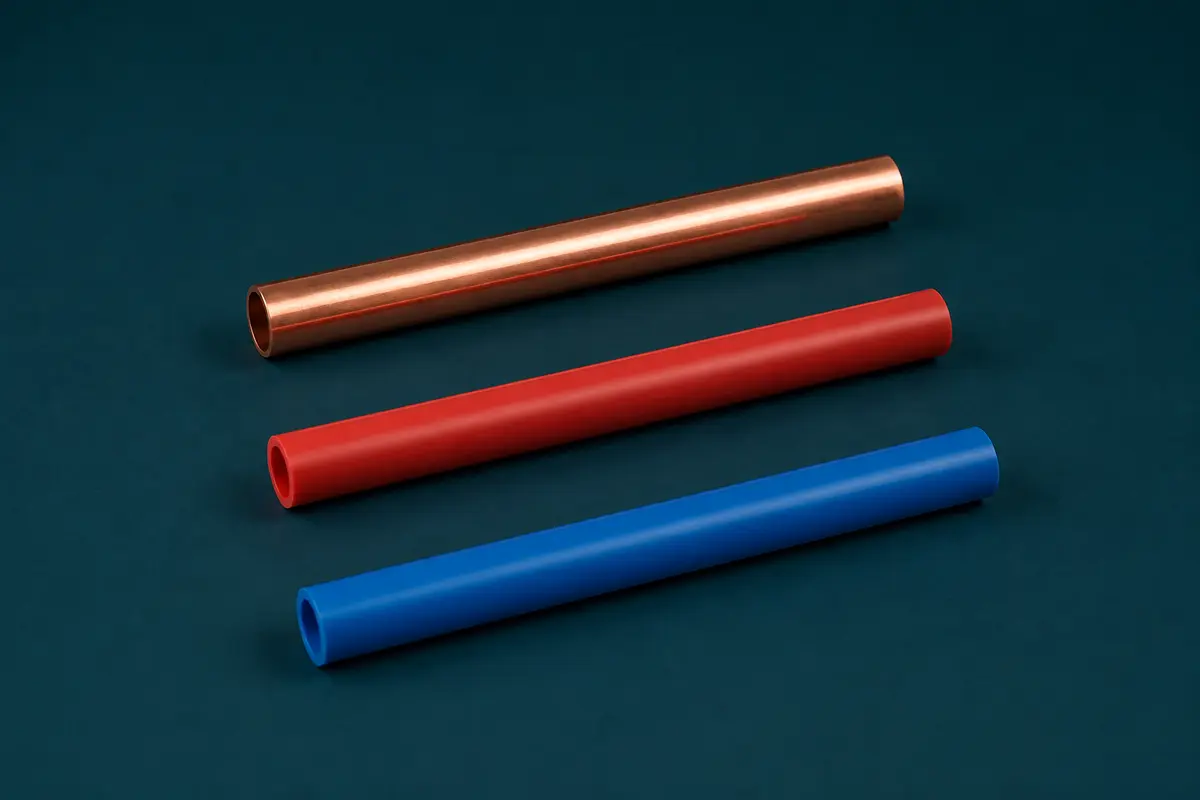
Material notes (PEX vs. copper):
- PEX (cross-linked polyethylene). A flexible plastic tubing manufactured to ASTM F876/F877 and certified to NSF/ANSI standards for potable water. It is corrosion-resistant, installs with fewer fittings, and is widely used in modern residential repipes. PEX must not be exposed to prolonged direct sunlight or UV.
- Copper. Rigid, time-proven, and corrosion-resistant in most water, but susceptible to pitting under certain water chemistries and more labor-intensive to install.
There is no universal “better.” The right material depends on the home’s water chemistry, the layout, the homeowner’s priorities, and the contractor’s recommendation. No material, lifespan, or cost-savings promise is made here.
Questions to ask a contractor
A short list of questions worth raising before any work starts, grouped by what they protect.
Credentials and paperwork
- Are you registered as a Pennsylvania Home Improvement Contractor (HIC) with the PA Office of Attorney General, and what is your HIC number? HIC registration is a consumer-protection registration, not a plumbing license and not an endorsement of plumbing competency.
- Will you handle the permit and inspection, and can you provide a written contract?
- Can you provide proof of insurance?
- Will the work be done by your employees or by subcontractors?
Scope and material
- What material do you recommend — PEX or copper — and why, given my home’s water chemistry and layout?
- Will you replace supply lines only, or also drains? What is included, and what is excluded?
- How will you access the pipes, and who handles drywall, plaster, tile, and paint repair?
Day-of-life disruption
- Will my home’s water be shut off, and for how long at a time? This matters for occupancy planning.
- What warranty do you provide on materials and workmanship?
Service-line questions
- For service-line questions — lead or galvanized — should I contact my water utility (Aqua or another utility) instead of, or in addition to, a private contractor?
Decision points worth taking seriously: material selection, full vs. partial scope, whether drains are included, and how finish restoration is handled.
Maintenance and prevention
Aging pipe cannot be maintained back to health. Realistic preventive actions:
- Know your pipe material. Identify whether the home has galvanized, PB, copper, PEX, or a lead service line. This is the single most useful piece of information for planning a future repipe.
- Check your service-line material. Aqua Pennsylvania maintains a service-line material map for its customers. For other utilities, contact the utility directly.
- Monitor for early signs. Recurring small leaks, pressure loss at multiple fixtures, and discoloration should prompt a professional assessment before failures multiply.
- Address water chemistry where copper pitting is a concern. A plumber can review local water-quality reports and recommend treatment if pH or chlorination is outside normal ranges.
- Protect PEX from UV. During and after installation, keep PEX out of prolonged direct sunlight.
- Plan the repipe before the emergency. Planning a repipe during a renovation is cheaper and less disruptive than emergency replacement after a major failure.
For service-line-specific concerns — lead or galvanized — the homeowner may not need to do anything except contact the utility. Aqua Pennsylvania replaces these at no direct cost under its program; eligibility and current project locations should be confirmed against Aqua’s current materials, since program phases change.
Safety boundaries
A few hard rules for a homeowner deciding what to do and what not to do:
- Do not attempt a DIY repipe of pressurized water, drain, or gas systems. This page provides no installation instructions, and pressurized supply work and drain work each carry serious risks if done incorrectly.
- Lead service lines and lead plumbing are a health hazard. Disturbance of lead pipe can release lead into dust and water. Replacement and disturbance should be handled by the water utility or a qualified professional, with EPA flushing and filter guidance followed.
- Sewage exposure carries serious health risks. Drain and waste pipe work should be left to professionals with proper PPE; homeowners should not enter a sewage-contaminated area without appropriate protection.
- Flooding near electricity is dangerous. If a leak has reached electrical panels, outlets, or appliances, shut off power at the breaker and stay clear of standing water near energized equipment. Call a qualified professional.
- After a repipe, verify water-heater settings and anti-scald valves. New pipe runs can change how quickly hot water reaches a fixture, and anti-scald devices may need adjustment.
- No response-time, outcome, cost-savings, code-compliance, or availability promises are made on this page. Repiping is a major project with many site-specific variables; the right contractor will provide a written estimate and a written contract.
Montgomery County considerations
A few things specific to Pennsylvania and Montgomery County, where evidence supports them:
- Plumbing license vs. HIC registration. Pennsylvania does not issue a single statewide plumbing license. Contractors doing residential home-improvement work must register as a Home Improvement Contractor (HIC) with the PA Office of Attorney General. HIC registration is a consumer-protection registration, not a plumbing license and not an endorsement of plumbing competency. Some Pennsylvania municipalities have established local licensure or certification for plumbers; the state maintains no single record of which municipalities do. Whether your municipality requires a local plumbing credential must be verified before booking work.
- Permits and the PA Uniform Construction Code. The UCC requires permits before regulated plumbing work and applies inspections to plumbing-system changes. Penn State PHRC notes that over 90% of Pennsylvania municipalities administer and enforce the UCC locally. The PA UCC moved to the 2021 I-Codes effective January 1, 2026, with phase-in provisions; the applicable edition for a given project depends on the municipality and the permit date.
- Permits are issued by the municipality. Under the UCC, individual townships and boroughs administer and enforce the code locally. The specific permitting authority, fee schedule, and exemption list for a given address must be confirmed with the local municipality.
- Service lines are utility-handled. Aqua Pennsylvania replaces lead and galvanized service lines at no direct cost to its customers under its own program and maintains a service-line material map. Whether your address is served by Aqua or another water utility — and who handles your service line — should be confirmed with your water utility directly. Lead and galvanized service line replacement is typically handled by the utility, not a private contractor.
For specific questions about your address — local water and sewer authority, permit triggers, whether a municipal plumbing credential is required, and which UCC edition applies — contact your municipality and your water utility directly.
Sources
- ASTM International — F876 Standard Specification for Crosslinked Polyethylene (PEX) Tubing — https://store.astm.org/f0876-23.html
- Plastic Pipe and Fittings Association (PPFA) — Top FAQs About PEX — https://www.ppfahome.org/page/faq-pex
- U.S. Environmental Protection Agency — Lead Service Lines — https://www.epa.gov/ground-water-and-drinking-water/lead-service-lines
- U.S. Environmental Protection Agency — Planning and Conducting Lead Service Line Replacement — https://www.epa.gov/ground-water-and-drinking-water/planning-and-conducting-lead-service-line-replacement
- Aqua (Essential Utilities) — Lead — Pennsylvania — https://www.aquawater.com/all-about-water-wastewater/water-quality/lead-pennsylvania
- Commonwealth of Pennsylvania — Apply for a Uniform Construction Code Building Permit — https://www.pa.gov/services/dli/apply-for-a-uniform-construction-code-building-permit
- Pennsylvania Department of Labor & Industry — Contractor Licensing — https://www.pa.gov/agencies/dli/programs-services/labor-management-relations/bureau-of-occupational-and-industrial-safety/uniform-construction-code-home/contractor-licensing
- Penn State PHRC — PA Uniform Construction Code (UCC) — https://www.phrc.psu.edu/industry-education/Resources/Uniform-Construction-Code.aspx
- AWWA Water Science — A 30-year review of copper pitting corrosion and pinhole leaks — https://awwa.onlinelibrary.wiley.com/doi/10.1002/aws2.1221
- This Old House — PEX vs. Copper Pipes: Which is Better for My Home? — https://www.thisoldhouse.com/plumbing/pex-vs-copper-pipes-which-is-better-for-my-home
- Wikipedia — Cross-linked polyethylene — https://en.wikipedia.org/wiki/Cross-linked_polyethylene
- Modern Castle — How to Identify Polybutylene Pipes, Lawsuits, & Replacement — https://moderncastle.com/home-resources/polybutylene-pipes
Related video
PEX vs Copper Pipes
A plumbing educator compares common PEX and copper characteristics that homeowners may hear discussed during repiping proposals.
Video: PEX vs Copper Pipes — This Old House.
Context and limits: Material choice still depends on the home, the proposed system, manufacturer requirements, and locally adopted code.