
Last verified: September 14, 2026.
What the letter is telling you — and what it isn’t
Letters arriving on Pennsylvania doorsteps about lead service lines are part of a nationwide inventory effort under the U.S. Environmental Protection Agency’s Lead and Copper Rule Revisions; initial inventories were due October 16, 2024. The letter is usually telling you one of three things: that your utility has identified your service line as lead, that records show it could be lead but it has not yet been confirmed, or that the material is unknown and the utility wants your permission to check.
The letter is an inventory or notification result, not a water test for your tap. Lead cannot be seen, tasted, or smelled, and EPA states that no safe level of lead exposure has been identified. Follow the utility’s instructions, ask about sampling and a filter certified for lead reduction if appropriate, and give priority to advice for children, pregnant people, or anyone whose clinician has raised a lead concern. The practical decision on your end is how to participate in the utility’s identification or replacement program and how to confirm the responsibilities for the line serving your property.
How Montgomery County’s two big utilities are running their lead programs
Two investor-owned utilities serve a large share of Montgomery County households, and the federal inventory work shows up differently through each.
Aqua Pennsylvania received Pennsylvania Public Utility Commission approval of its Lead Service Line Replacement (LSLR) Program on April 10, 2025. Under the approved settlement, Aqua may replace up to 1,500 customer-owned lead service lines per year and complete all identified lead service line replacements by December 31, 2034. Aqua serves roughly 450,000 customers across 32 Pennsylvania counties, and the Commission’s order describes how the company prioritizes work: emergency repairs that reveal lead, homes with elevated lead in tap samples, schools and licensed day-care facilities, homeowners who request replacement, and homes in systems that do not have widespread lead service lines. The settlement also directs Aqua to use PennEnviroScreen and the federal Justice40 Initiative tools to target environmental-justice areas and places where children face higher lead risk.
Pennsylvania American Water has been running an active service line identification program in the Norristown service area. A July 27, 2026 company announcement described door-to-door canvassing for more than 30,000 customers in 11 municipalities, with approximately 9,300 customer water service line materials still unidentified in the Norristown area at the time of the announcement. Outreach has been completed in Norristown Borough, East Norriton Township and West Norriton Township, and was actively underway in Plymouth, Whitemarsh and Whitpain townships, with Bridgeport Borough, Upper Merion Township, Lower Providence Township, Perkiomen Township and Worcester Township listed as next. Statewide, the company reported that more than 50,000 service lines had been identified and more than 3,400 customer-owned lead lines replaced since the project began. For customers in this program, the company has stated that if a service line is identified as lead or galvanized steel, it will work with the customer to replace the line at no direct cost to the customer.
A few limits this article does not cross: it does not assign specific streets or addresses to Aqua versus Pennsylvania American Water; it does not represent any municipal water authority, homeowners association well, or small investor-owned system; and it does not promise outcomes or pricing under either program. The PUC settlement and the company’s tariff filings — not this article — govern who pays what.
How a service line actually gets classified
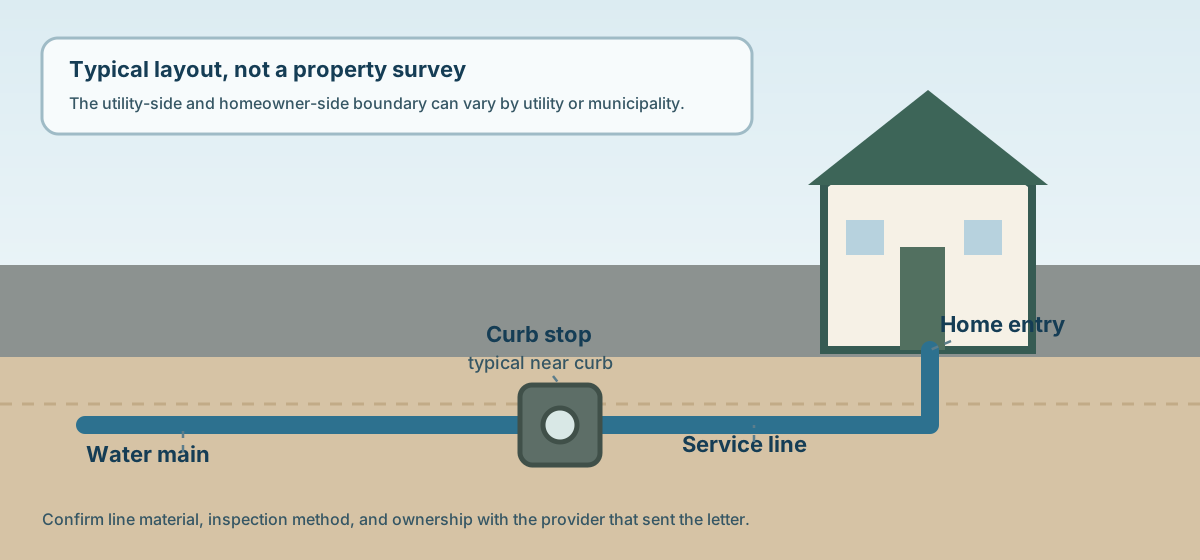
A service line is the pipe between the water main in the street and the first shutoff inside your home. Federal guidance allows a utility to classify a line through several methods, and the method the utility uses matters to you.
Records review. If the utility has old installation records, plats, or work orders that name the material, the line can be classified from paper alone. This method can classify a line when reliable records exist; older or incomplete records can leave the material listed as unknown.
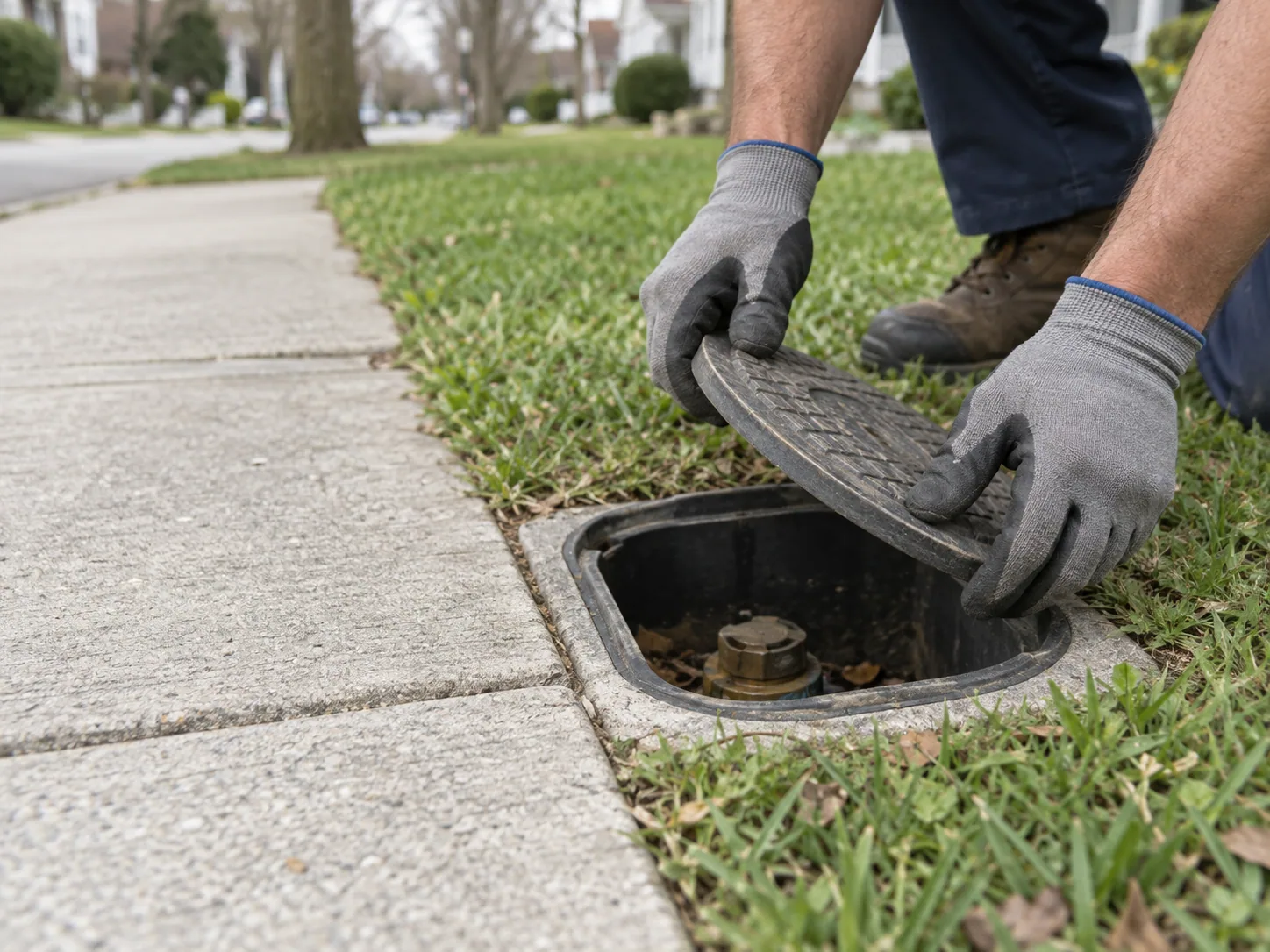
Visual or scratch inspection at the curb stop. Pennsylvania American Water’s canvassing is built around this. A technician or contractor opens the meter pit or curb box, identifies the pipe entering it, and in many cases performs a scratch test on a small section to distinguish lead (bright silver scratch, soft metal) from copper (hard, copper-colored) or galvanized steel (magnetic, dull gray). The company’s announcement notes that canvassers carry photo I.D. badges and wear logoed high-visibility vests, and that the work is being performed by CDM Smith under contract.
Excavation or potholing. When records and a curb-side look are not enough, the utility may need to expose a small section of the pipe near the foundation or inside the home to confirm the material before it touches the meter. This is the most reliable method and the one most likely to require coordination with the homeowner.
A useful answer from any contractor or utility representative working on this should name the method they intend to use, the location of the inspection, and whether they will need access inside the home.
What the homeowner-owned portion means for your project
Pennsylvania American Water describes its typical split as utility ownership from the water main to the curb stop and property-owner responsibility from the curb stop into the building. Other providers and properties can have different boundaries, so confirm the split in the letter, tariff, or directly with the utility. Both utilities describe programs that address customer-owned lead service lines. Ask whether the planned work is a full service-line replacement and what protective steps apply if any lead-bearing segment will remain or be disturbed.
For a homeowner, the practical implications are:
- If your utility offers a full replacement of both sides at no direct cost under an approved program, ask for the scope, restoration terms, filter/flushing instructions, and schedule in writing before deciding.
- If only the utility side is being replaced, ask in writing what happens to the home-side segment, whether the utility will coordinate its work with a replacement on your side, and whether a temporary filter or point-of-use device is offered during the disturbance.
- The “premise plumbing” inside the home — solder, brass fixtures, galvanized iron — is its own concern. The federal rule targets service lines; in-home lead sources are typically addressed through a separate filter, fixture, or flushing protocol rather than the service line program.
- The replacement work itself is performed by the utility or its contractor, not by a homeowner-hired plumber. A qualified plumber’s role is generally limited to any interior plumbing modification the homeowner separately chooses to make after the utility’s work is complete.
This article does not state a price, a savings amount, or an insurance outcome for any of these scenarios. Those are governed by the utility’s tariff, the PUC settlement, and any contract the homeowner separately signs.
What to ask the utility when a contractor knocks — or when you call
If someone shows up at your door, or if you are calling the utility in response to the letter, the following questions are appropriate for a homeowner to ask, and a useful answer should sound like this:
- “Can I see your photo badge and the work order?” A useful answer names the utility (Aqua Pennsylvania, Pennsylvania American Water, or your municipal authority), the contractor (for PAWC’s Norristown-area work, that is CDM Smith), and the program name.
- “Are you inspecting the line, replacing the line, or both?” A useful answer describes the specific step planned for your visit and whether you will need to be home.
- “Will any of this work touch the pipe inside my home?” A useful answer explains what interior access, if any, is needed, how long the visit takes, and what restoration is included.
- “If my line is lead or galvanized steel, what happens next, what does it cost me, and who pays?” A useful answer refers to the utility’s approved program (for Aqua, the PUC-approved LSLR Program; for PAWC, the lead service line replacement program announced in 2026), names the per-year cap where one exists, and confirms whether there is any direct cost to you.
- “How long until my line is replaced once it is identified?” A useful answer gives a window and references the program target date, such as December 31, 2034 for Aqua’s identified lines, rather than a vague “soon.”
- “What do I do with my tap water until then?” A useful answer includes a flushing protocol or a point-of-use filter recommendation consistent with EPA guidance, and a number to call if anyone in the household is a child, pregnant, or has been advised by a clinician to test their blood lead level.
Pennsylvania American Water’s announcement provides a self-reporting tool, an interactive service line map, and a dedicated phone, email, and scheduling link for the program; for Aqua, customer service and the company’s lead-program page are the appropriate first contact. If your letter came from a municipal authority rather than an investor-owned utility, contact that authority directly; the same questions apply.
What you should not do yourself, and when to call the utility first
A service line replacement is not a homeowner DIY project. Excavating to the water main, cutting into a pressurized service, or backfilling around a utility tap creates risk to you, to the utility’s distribution system, and to neighbors whose service depends on the same main. The right first call is almost always the utility that sent the letter.
There are also two situations that should move faster than the standard inventory process. If you are planning any work on your home that will disturb the yard between the curb and the house — landscaping, fence installation, a new driveway, a pool, or a foundation repair — call the water provider before work starts and follow all required utility-location steps. Disturbing an unidentified lead service line during excavation can release particulate lead into the water. Second, if a child in the household has had an elevated blood lead test, or a clinician has recommended testing, mention that when you call and follow the clinician’s advice; Aqua’s approved program lists elevated tap samples and child-serving facilities among its prioritization factors.

For emergencies — a water main break, a sudden loss of water pressure, or a suspected service line leak — call your utility’s 24-hour emergency line. Pennsylvania American Water’s published emergency line for its Pennsylvania customers is reachable through the contact page on amwater.com. For routine questions about the lead program, the company’s lead-specific contact for the Norristown-area program is reachable by email at [email protected] or by phone at 717-581-8599 as published in the July 2026 announcement. Aqua’s customer service line is published on aquaamerica.com for Pennsylvania customers.
This directory is independent and does not recommend or rank any plumber or contractor. Pennsylvania does not issue a single statewide plumber license. Confirm the local registration or permit requirements for the municipality where the work will occur, and verify whether the contractor must hold a current Pennsylvania Home Improvement Consumer Protection Act registration for the proposed scope before signing a contract.
Sources
- U.S. Environmental Protection Agency, Revised Lead and Copper Rule. https://www.epa.gov/ground-water-and-drinking-water/revised-lead-and-copper-rule
- Pennsylvania Public Utility Commission, PUC Approves Aqua PA’s Lead Service Line Replacement Plan (April 10, 2025). https://www.puc.pa.gov/press-release/2025/puc-approves-aqua-pa-s-lead-service-line-replacement-plan-4-10-25
- Pennsylvania American Water, Pennsylvania American Water Announces Service Line Identification Outreach in the Norristown Area (July 27, 2026). https://newsroom.amwater.com/2026-07-27-Pennsylvania-American-Water-Announces-Service-Line-Identification-Outreach-in-the-Norristown-Area
- U.S. Environmental Protection Agency, Protect Your Family from Sources of Lead. https://www.epa.gov/lead/protect-your-family-sources-lead