
Last verified: September 13, 2026.
Why a Buried Leak Matters More on Carbonate Bedrock
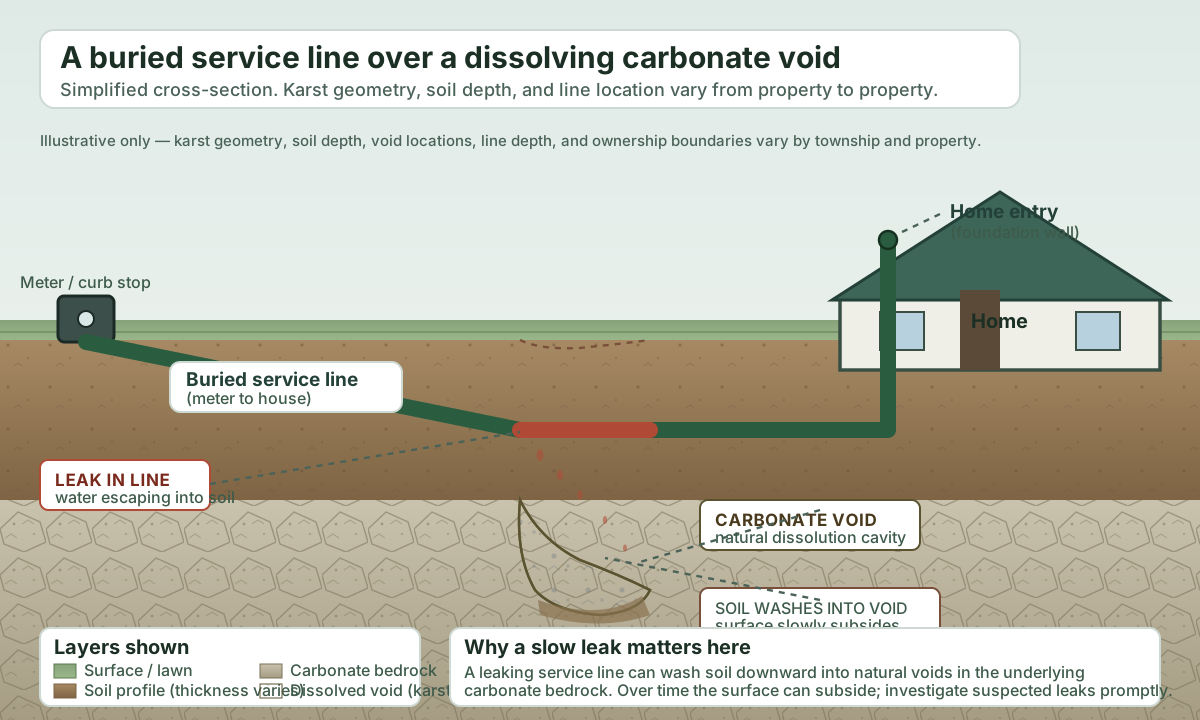
If your home sits in the carbonate belt that runs through Whitemarsh, Plymouth, and Upper Dublin townships, the bedrock under your yard is the kind that dissolves slowly in groundwater. That is the same geology that can produce sinkholes. A buried water-service line that leaks — even a slow one — can wash soil down into those natural voids and accelerate the process. Changes in metered use, unexplained pressure loss, wet ground, or sound detected with professional leak-location equipment can justify further investigation before excavation. No plumbing test predicts or prevents a sinkhole; the goal is to identify a suspected line leak and involve the appropriate utility, plumber, and geotechnical or geological professional when ground movement is present.
Where the Limestone-Belt Claim Applies—and Where It Does Not
Sinkholes in Pennsylvania are a documented geologic hazard in areas underlain by limestone and dolomite bedrock, where the rock dissolves over thousands of years as groundwater and surface water move through fractures (PA DEP; PA DCNR). The same rocks form the carbonate-rock aquifers that the USGS identifies as the most vulnerable of Pennsylvania’s aquifer types when they sit at or near the land surface.
Montgomery County is one of fourteen Pennsylvania counties with a county-wide karst-feature inventory cataloged by the Pennsylvania Geological Survey since 1985 and published through PaGEODE. The Whitemarsh–Plymouth–Upper Dublin corridor sits on Cambrian-Ordovician carbonate units (such as the Ledger Dolomite, Conestoga Limestone, and Elbrook Formation) that USGS geologic-unit data confirms are mapped within Montgomery County. This is the same general setting that PA DEP and PA DCNR both describe as prone to karst features.
What this guide does not establish:
- A point count of sinkholes on any individual property, parcel, or block.
- Whether any single sinkhole you have heard about was caused by a water-line leak versus natural cover collapse.
- An insurance, liability, or repair-cost outcome.
- That Pennsylvania issues a statewide plumber license. It does not.
If you are on a private well, your testing cadence and treatment choices are yours to make. If you are on public water from a township supplier or a private utility such as Aqua Pennsylvania or North Wales Water Authority, the water entering your house is the purveyor’s responsibility at the meter; the service line from the meter (or curb stop) to your house is generally the homeowner’s responsibility, but the exact division varies by township and purveyor — ask before you sign work.
What a Plumber Must Establish Before Excavation
A serviceable leak investigation in this belt may combine several checks, selected for the property and pipe material:
- Meter and usage check. With all fixtures and water-using equipment off, the plumber or utility can check whether the meter still registers flow. The serving utility should be contacted before any test that requires operating its curb stop or meter.
- Isolated pressure testing. A qualified plumber may isolate the customer-side service and monitor it with appropriate equipment. The procedure and interpretation depend on the system layout; homeowners should not operate utility valves or pressurize the line themselves.
- Professional leak location. Acoustic listening, a geophone, tracer methods, or targeted exposure may help narrow the location. The useful method depends on pipe material, depth, soil, background noise, and site access.
A useful diagnostic report is written and dated, identifies the method and test conditions, records the readings or observations, and sketches where the line is believed to run relative to the foundation. If the report you receive is only verbal, ask for the written version.

If you are on a private well finished into carbonate rock, the same diagnostic logic applies to the line from the well pit or well head to the pressure tank and into the house. The plumber will not certify the well’s water quality — that is a separate test that Penn State Extension’s water-test resources can help you interpret — but they should be able to tell you whether the line is the suspect.
Repair Choices When Karst Ground Is Part of the Job
Once a leak is found, the choices are typically:
- Spot repair (open-cut). Excavate down to the failed section and replace it. This is the most direct option when the failure is shallow and accessible. The trade-off is that excavation itself, in carbonate terrain, is the activity most likely to disturb the soil bridge over a hidden void and trigger a small collapse. A responsible contractor will probe ahead with a shovel or vacuum excavation rather than a machine-mounted hammer in a yard with a documented sinkhole history.
- Approved trenchless replacement. In some conditions, a qualified contractor may be able to pull or burst a new potable-water service along an existing path. Suitability depends on the pipe, required approvals, nearby utilities, and whether the known route crosses unstable ground; the water provider and municipality must approve the method.
- Abandonment and new route. The old service is abandoned and a new tap or new well-side connection is run along a different path. This is the most expensive option and usually requires coordination with the water purveyor or, for wells, with the well driller and your township.
No option is universally best. The right one depends on where the leak is, what the pipe is made of, how the yard is finished, and what your township’s plumbing or right-of-way requirements actually are. Ask the plumber to walk you through the option they recommend and why, and to put the answer in writing.
Questions That Test Local Diagnostic Judgment
A useful conversation in this belt covers both the diagnostic and the local context. A few questions worth putting on the table:
- “Which registrations, permits, and inspections apply to this job, and can I verify them before signing?” Pennsylvania does not issue one statewide plumber license. Local requirements and PA Home Improvement Consumer Protection Act registration applicability should be confirmed for the actual scope.
- “How will you confirm and locate the leak before quoting excavation, and will you provide the findings in writing?” A useful answer names the method, its limits, and what additional step would be needed if the first result is inconclusive.
- “If you find a leak, will you probe the trench path by hand or vacuum before excavating, given the karst setting?” A useful answer acknowledges the local geology and describes how they plan to handle a sudden void.
- “What is your plan if the trench opens into a void larger than the pipe?” A useful answer is to stop, document, and call the property owner before backfilling. A useful answer is not “we’ll just fill it.”
- “If I am on a private well, what water-quality testing or disinfection does the well professional recommend after the line is disturbed?” Penn State Extension provides resources for testing and disinfecting private water supplies; the correct step depends on what was opened and how the work was performed.
- “Will you give me a written scope, a written price, and a written warranty in plain language, with the township permit number if one is required?” A useful answer is yes; an experienced local plumber will not be surprised by the question.
Sinkhole Safety and the Limits of a Plumbing Visit
- Pennsylvania DEP guidance is direct: do not enter a sinkhole, do not attempt to fill it yourself, restrict access, photograph it from a safe distance, and contact local emergency response if the hole is near a utility or in a roadway.
- Report suspected sinkholes that may be related to a permitted activity (such as quarry pumping) to the PA DEP District Mining Office or Regional Office. For others, the Pennsylvania Geological Survey is the historical reporting contact.
- PA DEP’s fact sheet says landowners are generally responsible for repairs when no regulated activity is involved. Insurance terms vary; confirm coverage with your carrier rather than assuming an outcome.
- This guide does not diagnose your home, recommend a contractor, or warrant any specific outcome. It frames what a competent inspection looks like and what a competent answer from a plumber sounds like in this carbonate belt.
Sources
- Sinkholes — Pennsylvania Department of Environmental Protection
- Sinkholes — Pennsylvania Department of Conservation and Natural Resources
- Sinkholes (Fact Sheet 5300-FS-DEP4045) — PA DEP Bureau of Mining and Reclamation (PDF, dated 12/2005)
- Karst Features (Layer 8) — Pennsylvania Geological Survey, via PASDA / ArcGIS REST
- Pennsylvania Spatial Data Access — Karst Features (DCNR / PASDA)
- Resources for Water Well, Spring, and Cistern Owners — Penn State Extension
- Major Aquifer Material Types in Pennsylvania — U.S. Geological Survey
- Geologic Units in Montgomery County, Pennsylvania — USGS Mineral Resources Online Spatial Data