Last verified: October 5, 2026.
If the pressure in your third-floor shower dropped overnight, check for a leak first. Run a downstairs faucet and look for water where it should not be. If something is leaking, shut off water at the main shutoff valve and call a plumber.
If the shower has trickled for months, or it has always been weak while every lower floor runs strong, you have a slower mystery. It usually comes down to two suspects: the height the water has to climb, and the age of the pipe feeding your house. On the Main Line, both are common. Here is how to tell them apart, and what to check before you spend money.
Why third floors get the worst of it
Water loses push as it climbs. A house that stacks three full floors puts the top shower at the end of the tallest run, so it gets whatever pressure is left. Fixtures one floor down can feel fine while the top floor barely rinses.
Plumbing rules expect the house to account for this. The 2024 International Plumbing Code is a model code, not Pennsylvania law. It sets a minimum 3/4-inch water service pipe (Section 603.1). It also requires the pipe to be sized to the pressures the code calls for. Where the street can genuinely supply enough, no pump is needed. Where it can’t, the code’s answer is a water pressure booster system on the building supply (Sections 604.7 and 606.5).
Pennsylvania folds model codes like this into the statewide Uniform Construction Code, and your township enforces its own adopted edition. Treat the section numbers above as the concept, not a citation that applies automatically in Bala Cynwyd or Bryn Mawr. Any plumber you hire should confirm the locally enforced edition with your township’s permit office.
The Main Line factor: houses built before anyone sized for this
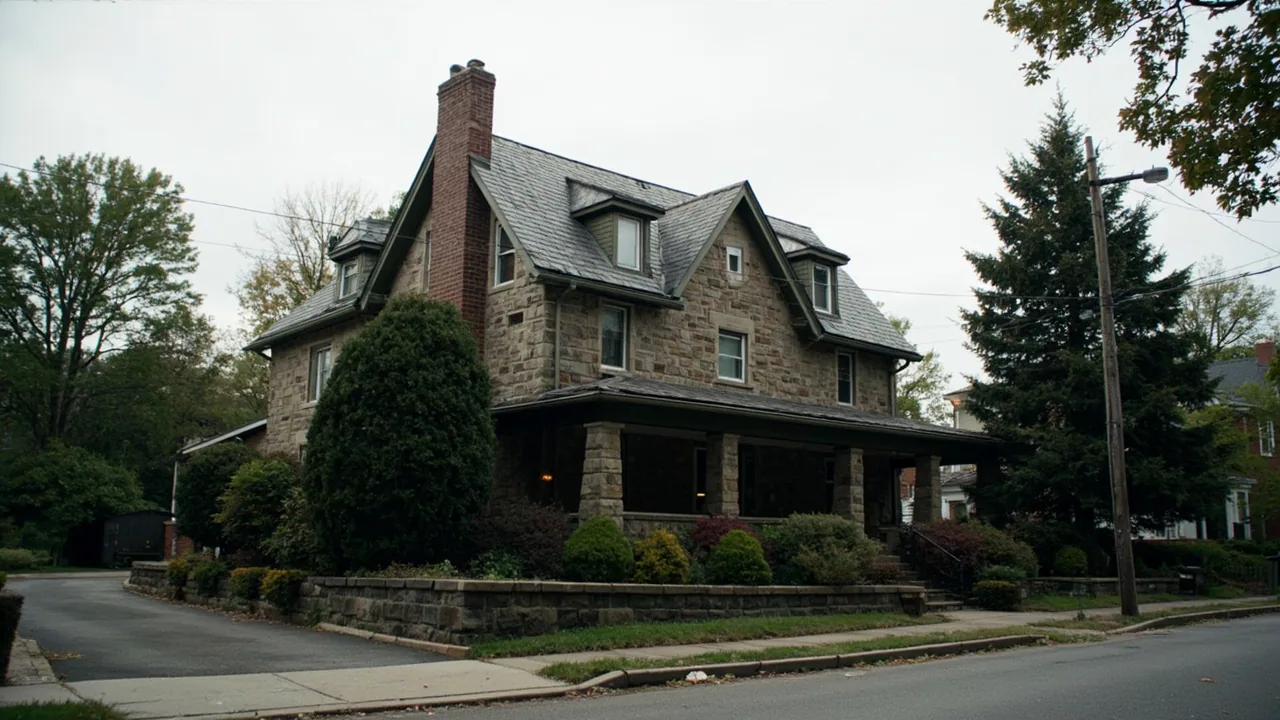
The Main Line’s housing stock is old by design. During the 1870s, the Pennsylvania Railroad developed “havens for the elite” west of Philadelphia, the Encyclopedia of Greater Philadelphia says. The corridor runs through parts of Montgomery, Delaware, and Chester Counties. Developers gave the towns Welsh names and built them up through the early twentieth century. Banker A.J. Drexel and publisher George W. Childs planned Wayne around an 1884 train station. The rail line out to Cynwyd opened that same year.
A house from 1890 or 1910 was plumbed for its era. Nobody sized a generous service line for a bathroom three stories up, because the original house may not have had one. The pipe from the street to your house (the water service line) may still be that original pipe, more than a century old.
That matters because some old service lines are galvanized iron: steel pipe coated with zinc that rusts from the inside over decades. As it rusts, the inside of the pipe narrows. A narrowed service line can choke flow to the whole house. The effect shows up first and worst at the fixtures with the longest climb.
The usual suspects, checked in order
A competent plumber works through a short list, roughly from cheapest to most invasive. You can do the first item yourself in five minutes.
- The showerhead. Mineral scale clogs older heads and mimics pressure loss. Unscrew the head, run the arm into a bucket, and see whether the stream improves. Cleaning or a new head costs almost nothing.
- The pressure readings. A plumber can meter pressure at the street connection and at an upstairs fixture, then compare the numbers. Low pressure upstairs with healthy pressure at the street points to height or blockage, not the water company.
- The pressure regulator. Some houses have a pressure regulator (a valve that tames overly strong street pressure) where the service line enters. A failing one can strangle flow house-wide, top floors first. The model code requires a regulator where static pressure inside the house exceeds 80 psi (Section 604.8).
- The service line material. This is the Main Line question. If the line is original galvanized iron, its narrowed bore is a leading suspect. It is also exactly the kind of pipe federal rules now target.
- A booster pump. Only after the first four come up clean. When street pressure genuinely cannot serve the house’s height, a booster system is the code framework’s answer. It comes with its own requirements (Sections 606.5.1 and following).
Your pipes or the utility’s?
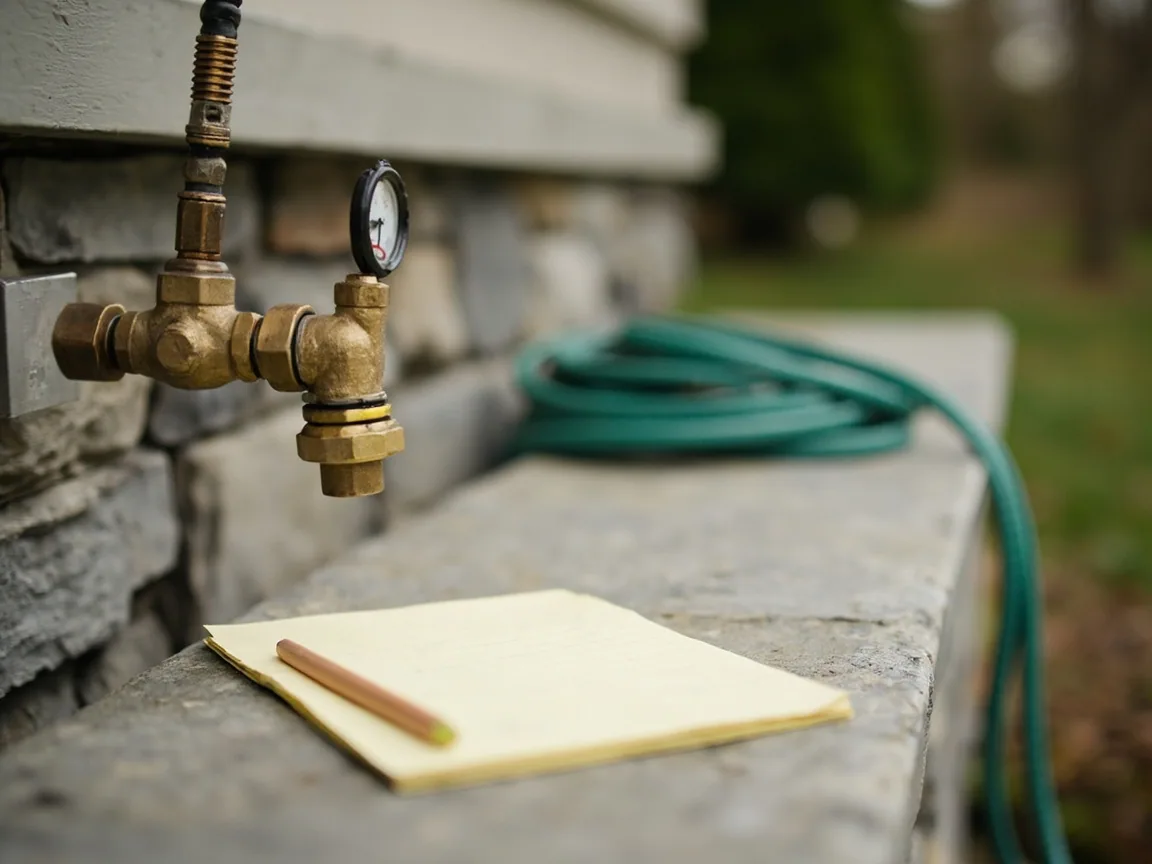
The line from the street main into your house is split into two parts: the utility side and the customer side. Where that split sits depends on the utility and the town. Ask your water utility where the boundary falls on your street.
On much of the Main Line, Aqua Pennsylvania is the water utility. The name on your bill settles it. Aqua Pennsylvania is running a service line inventory and replacement program. It replaces lead and galvanized service lines at no direct cost to customers as lines are identified. The Pennsylvania Public Utility Commission approved Aqua’s program on April 10, 2025. The plan allows replacing up to 1,500 customer-owned lead service lines a year. It targets completion of both company-owned and customer-owned replacements by December 31, 2034.
Two limits to keep in mind. The federal rule behind these programs is the 2024 Lead and Copper Rule Improvements. It covers the lines the utility controls. Timelines for the customer side depend on state implementation. And the program targets lead and galvanized-requiring-replacement lines; it is a health program, not a pressure-boosting service. If your identified line qualifies, replacement is a real opportunity. If it doesn’t, pressure still has to be fixed the plumbing way.
What you can do yourself, and what you can’t
The showerhead cleanup is fair game for anyone with a wrench and an hour. Everything past your main shutoff is not. Replacing a service line, swapping a pressure regulator, or installing a booster pump means opening walls or the yard. It can also mean wiring a pump motor. That is licensed plumber work.
Permits matter here too. Lower Merion Township, Narberth Borough, and Radnor Township each run their own building and codes office. A water service replacement or a booster pump installation typically needs one.
When you call around, ask each plumber one question: what permit will my township require for the job? If a contractor waves the question off, walk the other way.
What it costs
Booster pumps: Angi’s cost data shows a typical residential booster pump installation averages about $1,200. The range runs from about $200 to $10,000, depending on the pump, access, and added plumbing and electrical work (Angi, accessed October 4, 2026). That is national data, not a Main Line quote, so treat it as a shape of costs, not a price.
A service line replacement is a different job with its own price, and we don’t have a verified Main Line cost range for it in this piece. If Aqua’s inventory has flagged your line for replacement, it may be covered at no direct cost under the program above. If not, get two written quotes and compare what each includes.
No honest timeline fits every house. How long your water is off during a service line replacement is a question to ask each plumber before you sign anything.
Three questions to ask a plumber
- Can you show me the pressure at the street and the flow at the third-floor shower before we talk about fixes? Numbers first. The fix should follow the measurements, not the other way around.
- What is my service line made of, and can we check the utility’s inventory records before quoting anything? On Aqua-served streets, the utility may already know or suspect the material at your address.
- If a booster pump is your recommendation, what permit does my township require, and what keeps pressure below 80 psi after the pump? A pump powerful enough to fix a third floor can over-pressurize everything else if it is installed without protection.
One more check before you sign anything. Pennsylvania requires home improvement contractors who take jobs over $500 to register with the state Attorney General under the Home Improvement Consumer Protection Act. That requirement has been law since Act 132 of 2008. Their registration number must appear in their advertisements, contracts, estimates, and proposals. If a plumber’s truck carries the business’s ad, the number must be on the truck too. Contracts over $500 must be in writing and signed by both the homeowner and the contractor. Some towns also keep their own plumber licensing; Philadelphia, for one, licenses plumbers through its Department of Licenses and Inspections. Use the Attorney General’s online registration search, linked in Sources, before money changes hands. Between the state registration search and your township’s permit office, that is the verification you control.
Keeping the pressure you paid for
After any fix, rerun the shower test. Strong flow at the third floor with the showerhead as it was is the result you want. If a booster pump was installed, ask the plumber how often the pump and its regulator should be checked, and file the paperwork with your house records.
If you do nothing else this week, do the free check: look up your address on Aqua Pennsylvania’s service line inventory pages, linked in Sources. Knowing what your line is made of turns every later conversation with a plumber, and every quote, into a shorter one.
Whether your top-floor shower was always weak or faded over the years, the path is the same. Measure the pressure, learn the pipe, and only then pick the fix.
Sources
- “Railroad Suburbs,” Encyclopedia of Greater Philadelphia (Rutgers University–Camden), accessed October 4, 2026. https://philadelphiaencyclopedia.org/essays/railroad-suburbs/
- “Planning and Conducting Lead Service Line Replacement,” U.S. Environmental Protection Agency, accessed October 4, 2026. https://www.epa.gov/ground-water-and-drinking-water/planning-and-conducting-lead-service-line-replacement
- 2024 International Plumbing Code, Chapter 6, Water Supply and Distribution (Sections 603.1, 604.7, 604.8, 606.5), International Code Council, viewed via UpCodes, accessed October 4, 2026. https://up.codes/viewer/general-services-administration/ipc-2024/chapter/6/water-supply-and-distribution
- “Contractor Frequently Asked Questions, Home Improvement Consumer Protection Act,” Pennsylvania Office of Attorney General, accessed October 4, 2026 (the same page links the public registration search at hicsearch.attorneygeneral.gov). https://www.attorneygeneral.gov/resources/home-improvement-contractor-registration/contractor-frequently-asked-questions/
- “Lead – Pennsylvania,” Aqua Pennsylvania, accessed October 4, 2026. https://www.aquawater.com/all-about-water-wastewater/water-quality/lead-pennsylvania
- “PUC Approves Aqua PA’s Lead Service Line Replacement Plan,” Pennsylvania Public Utility Commission, April 10, 2025, accessed October 4, 2026. https://www.puc.pa.gov/press-release/2025/puc-approves-aqua-pa-s-lead-service-line-replacement-plan-4-10-25
- “Booster Pump Installation Cost,” Angi (vendor cost guide), accessed October 4, 2026. https://www.angi.com/articles/booster-pump-installation-cost.htm
- “Get a Master Plumber’s License,” City of Philadelphia, Department of Licenses and Inspections, accessed October 5, 2026. https://www.phila.gov/services/permits-violations-licenses/get-a-license/trade-licenses/get-a-master-plumbers-license/