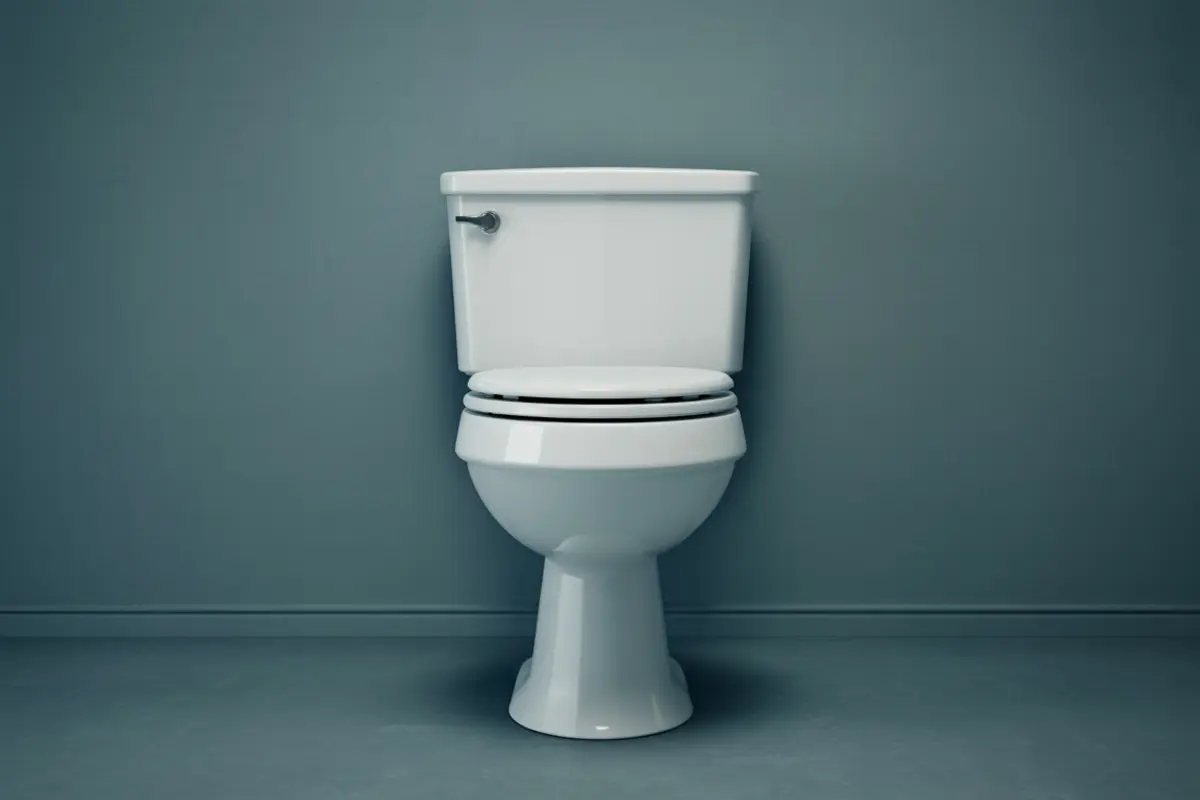
A toilet is the most-used plumbing fixture in any home, and the one most likely to fail in some small way long before it stops working entirely. The flapper inside the tank wears out. The wax ring under the base compresses and eventually leaks. The fill valve sticks. None of these failures is an emergency in the way a burst pipe is, but each one wastes water, can damage flooring if ignored, and nudges a homeowner toward a contractor.
If you have come here with a specific problem — a toilet that keeps running, leaks at the base, rocks when you sit on it, clogs more than once a month, or is just an older high-flush fixture you are weighing replacing — this page will help you understand what kind of work you are likely looking at, how a contractor diagnoses it, what affects scope, and the licensing, permit, and water-utility questions worth raising before signing anything.
No cost ranges, savings promises, response-time guarantees, or “best plumber” rankings appear here. Pricing varies too much from one home, one neighborhood, and one rough-in dimension to another for a county-level page to be honest about it. A written estimate from a qualified plumbing contractor is the right place for numbers.
At a glance
- Most common cause of a running toilet: a worn or damaged flapper inside the tank. Fill valves, floats, chains, and refill tubes can also cause running.
- Most common cause of water at the base: a failed wax ring or a cracked, rusted, or improperly-heighted flange.
- Typical service paths: tank-component repair, base-seal/flange reset, clog clearing, or full replacement.
- Licensing in PA: the state has no single statewide plumber license. Home improvement contractors doing at least $5,000 of work per year must register with the PA Office of Attorney General (HIC) — a consumer-protection registration, not a plumbing license.
- Permits: Montgomery County itself does not issue standard building permits. Individual townships and boroughs administer and enforce the PA UCC locally. Whether your specific job needs a permit depends on your municipality.
- Water utility: Montgomery County is served by multiple providers. Confirm yours before asking about WaterSense rebates.
What “toilet repair and installation” actually means
A toilet is a gravity-fed fixture: water in the tank is released through a flush valve into the bowl, and the bowl’s trapway carries waste into the drain line. Most problems trace to a small set of wear parts in the tank or at the floor seal.
Two scopes are commonly bundled under “toilet work”:
- Repair. Diagnosing and fixing a malfunctioning toilet without replacing the whole fixture. Common repairs include tank-internal part swaps (flapper, fill valve, flush valve, float, refill tube), base-seal and flange work, clog clearing, and re-securing a rocking toilet.
- Replacement. Removing the old toilet and installing a new one: shutting off and disconnecting the supply, draining and lifting the old unit, scraping and prepping the flange, setting a new wax or rubber seal, leveling and securing the bowl, and reconnecting the tank and supply line.
A repair that ends up requiring a replacement is not unusual: a flange that has rotted through, a tank that has cracked, or a subfloor that has softened under a long-standing leak will often tip a job from “swap a part” into “reset or replace.”
When homeowners usually seek help
Homeowners usually arrive at toilet service through one of three doors:
- A symptom that won’t go away. A toilet that runs every few minutes, leaks at the base after flushing, rocks when sat on, or clogs more than once a month has crossed the line from “ignore it” to “fix it.”
- A known aging fixture. The home has a pre-1994 toilet that uses 3.5 gallons per flush or more, and the homeowner is weighing replacement on water-bill or sustainability grounds.
- A planned bathroom refresh. The homeowner is mid-remodel or replacing flooring and decides to replace the toilet at the same time.
None is urgent the way a sewer backup or burst pipe is, but a base leak left for weeks can damage the subfloor, and a running toilet can quietly waste a lot of water.
Common signs and causes
Symptoms that should prompt a professional assessment, not self-diagnoses:
- Running toilet. Water continues to flow or the tank refills on its own between flushes.
- Weak or incomplete flush. The bowl does not clear on one flush.
- Water around the base. Puddling or staining at the floor after flushing.
- Rocking or unstable toilet. The bowl shifts under weight.
- Sewer odor. Persistent sewage smell near the toilet.
- Frequent clogs. More than one a month, or clogs a plunger does not clear.
- Visible cracks or chips. On the tank or the bowl.
The underlying causes are more limited than the symptom list:
- A worn or damaged flapper is the most common cause of a running toilet. The flapper is the rubber seal at the bottom of the tank; it opens during a flush and must reseal afterward. When it degrades or misaligns, water leaks continuously into the bowl (Fluidmaster; This Old House).
- Flapper chain or refill-tube problems. A chain that is too long can slip under the flapper and prevent a seal; a chain that is too short can hold the flapper partly open. A refill tube pushed too far into the overflow pipe can siphon water continuously.
- Fill-valve or float failure. The valve that refills the tank can fail to shut off; the float can be misadjusted.
- Failed wax ring or flange. The seal between the toilet and the flange compresses over time. A cracked, rusted, or improperly-heighted flange can leak at the base, allow sewer gas into the room, and let the toilet rock (Oatey).
- Clogs. Blockages in the trapway or drain line, often from non-flushable items, paper buildup, or — in older homes — partial drain-line damage further down.
A symptom is not a diagnosis. A running toilet can be a flapper, a fill valve, a chain, or a refill tube. A base leak can be a wax ring, a flange, a cracked horn on the toilet, or a supply-line leak at the bottom of the tank.
How professionals diagnose
A toilet diagnosis is mostly careful observation, occasionally a quick test.
- Tank inspection. Open the tank and check each part: flapper condition and seating, chain length and hang, fill-valve operation, float height, refill-tube position, debris or mineral buildup.
- Dye test. A few drops of food coloring in the tank, left for ten minutes without flushing. If color shows up in the bowl, the flapper is leaking silently — the single most useful homeowner check for a “phantom” water-bill increase.
- Base and flange inspection. Check for water staining, rocking, and odors at the base. If the toilet has to come off, the flange height relative to the finished floor (typically on top of, or within about a quarter inch of, the finished floor) is checked, along with corrosion or cracks on the flange ring.
- Rough-in measurement. For replacement, the distance from the finished wall to the center of the closet bolts — the “rough-in” — is measured. Most homes are 12-inch rough-in; 10- and 14-inch rough-ins exist and limit model choices (Kohler).
- Clearance check. Water-closet fixtures have code-based minimum clearances: 15 inches from the centerline to any side wall or obstruction, and 21 inches of clear space in front, in residential applications per the IRC fixture-clearance provisions (UpCodes). The PA UCC has moved to the 2021 I-Codes effective January 1, 2026, with phase-in provisions; the applicable edition depends on the municipality and permit date (PA DLI).
- Clog location. For repeat clogs, the plumber determines whether the blockage is local to the trapway or further down the drain line (often signaled by multiple fixtures backing up).
Diagnosis should end with a clear stated cause and a recommended path. A contractor who proposes work without naming the specific cause has skipped a step.
Common service and repair paths
Once the cause is identified, the work generally falls into one of these paths:
- Tank-component repair. Replacing the flapper, fill valve, or flush valve, or adjusting the float and chain. The most common and least invasive repair, usually done in a single visit.
- Base-seal repair. Lifting the toilet, replacing the wax ring (or upgrading to a rubber/foam seal), resetting the bowl, and reconnecting. Often combined with flange work.
- Flange repair or replacement. Raising a low flange with a spacer ring, repairing a cracked flange with a repair ring, or replacing a corroded flange. Sometimes part of a base-seal job.
- Clog clearing. Using a closet auger for trapway or local-drain blockages. Deeper blockages may need drain-line snaking or camera inspection.
- Full replacement. Removing the old toilet, prepping the flange, setting a new seal, leveling and securing the new bowl, and connecting the tank and supply line.
- Subfloor or flange damage. Discovered when the toilet is lifted. If the subfloor has rotted under a long-standing base leak, carpentry work outside the plumber’s scope is needed first.
The right path depends on the actual failure. A flapper is a short part replacement. A flange replacement, subfloor repair, or full replacement is a half-day to full-day job and may involve a second trade.
What affects project scope
These factors change the size and complexity of the work — none of which this page converts into a price promise:
- Type of failure. A flapper swap is a different scope from a flange replacement, which is a different scope from a full toilet swap.
- Rough-in size. Most homes are 12-inch rough-in; 10- or 14-inch rough-ins limit model choices and require special ordering.
- Flange condition and height. A cracked, corroded, or recessed flange adds work.
- Subfloor condition. A long-standing base leak can rot the subfloor. Carpentry repair is outside most plumbers’ scope and adds a second trade.
- Fixture type. One-piece vs. two-piece, standard vs. wall-hung, and round-front vs. elongated bowls affect installation complexity and parts (Kohler).
- Water-efficiency choice. Replacing an older high-flush toilet with a WaterSense-labeled model — 1.28 gallons per flush or less, about 20% less than the 1.6 gpf federal standard — is a common upgrade. Toilets are the largest single source of indoor water use in most homes (EPA WaterSense).
- Permit and inspection requirements. Under the PA UCC, regulated plumbing work requires permits and inspections; whether a specific toilet job crosses that threshold depends on the municipality.
No cost, savings, or outcome guarantee is made here. Water-efficiency savings figures from the EPA are national averages, not promises for any specific home, and rebate availability varies by water utility.
Questions to ask a contractor
Worth raising before any work starts:
- Are you registered as a Pennsylvania Home Improvement Contractor (HIC) with the PA Office of Attorney General, and what is your HIC number? HIC registration is a consumer-protection registration required for contractors performing at least $5,000 of home-improvement work per year. It is not a plumbing license and not an endorsement of plumbing competency (PA OAG). Registration can be verified through the PA OAG’s HIC search.
- Does this work require a permit in my municipality, and who pulls it? A flapper swap generally does not; work that alters the plumbing system may. Montgomery County itself does not issue standard building permits — individual townships and boroughs administer and enforce the UCC locally.
- Is this a repair or a replacement, and what is the specific cause you found? A contractor should be able to name the failing part or failure mode, not just “the toilet needs work.”
- What is my toilet’s rough-in, and does that limit my replacement options?
- If replacing, do you recommend a WaterSense-labeled model (1.28 gpf or less), and why? The choice between 1.28 gpf and the 1.6 gpf federal standard is a real trade-off in flush performance vs. water use (EPA WaterSense).
- Will you inspect the flange and subfloor, and what happens if you find damage?
- What is included and what is excluded? Haul-away, supply-line replacement, and finish or flooring repair should be in writing.
- What warranty do you provide on parts and workmanship?
- Can you provide proof of insurance and a written contract?
Decision points worth taking seriously: repair vs. replacement, water-efficiency choice, flange or subfloor damage handling, and whether finish work is in scope.
Maintenance and prevention
Where the evidence supports homeowner action:
- Address a running toilet promptly. A flapper leak can waste a lot of water. The flapper is a routine replacement part and the most common cause of running.
- Do a periodic dye test. A few drops of food coloring in the tank, left for ten minutes. If color appears in the bowl, the flapper is leaking.
- Flush only human waste and toilet paper. Wipes and other items are a leading cause of clogs.
- Consider a WaterSense upgrade. Replacing an older high-flush toilet with a WaterSense-labeled model is the largest single indoor water-use reduction available to most homes (EPA WaterSense). Some utilities offer rebates; the EPA maintains a rebate finder, but rebates are issued by utilities, not the EPA, and availability must be confirmed with the local provider.
- Confirm your water utility. Montgomery County is served by multiple providers — Aqua Pennsylvania in parts of the county (its Southeastern Division), North Penn Water Authority in the Lansdale and North Penn area, and others. The serving provider for a given address must be confirmed directly.
Wear parts degrade with age and water chemistry and are replaced as they fail. There is no maintenance that prevents flapper or wax-ring failure; there is only timely attention once the symptom appears.
Safety boundaries
A few hard rules for what this page does not provide:
- No DIY instructions for sewage, gas, or energized equipment. Work on the wax ring, flange, or drain involves exposure to sewage and sewer gas and should be left to professionals with proper PPE.
- No DIY instructions for tank-internal part replacement that requires shutting off and reopening a supply line. Mistakes at the supply connection risk leaks inside the wall or under the tank.
- Water near electricity is dangerous. If a toilet leak or overflow is near electrical outlets, appliances, or a panel, shut off power at the breaker and stay out of standing water near energized equipment. Call a qualified professional.
- Chemical drain cleaners are generally not recommended for toilets. They can damage porcelain, soften wax rings, and pose splash hazards. Mechanical clearing (plunger, closet auger) is the preferred homeowner method for a normal clog.
- Toilets are heavy. Improper lifting can cause injury or damage to the bowl, flange, or floor. Two-person handling is common.
- No response-time, outcome, cost-savings, code-compliance, or availability promises are made on this page. Toilet work varies too much from one home to another for county-level promises to be honest.
Montgomery County considerations
A few things specific to Pennsylvania and Montgomery County, where evidence supports them:
- Plumbing licensure vs. HIC registration. Pennsylvania does not issue a single statewide plumbing license. Contractors doing residential home-improvement work must register as a Home Improvement Contractor (HIC) with the PA Office of Attorney General — a consumer-protection registration, not a plumbing license and not an endorsement of plumbing competency (PA DLI; PA OAG). Some municipalities have established local licensure or certification for plumbers; the state maintains no single record of which do. Whether a specific Montgomery County municipality requires a local plumbing credential must be verified before booking work.
- Permits and the PA UCC. The PA Uniform Construction Code requires permits for regulated plumbing work and subjects plumbing-system changes to inspection. The UCC moved to the 2021 I-Codes effective January 1, 2026, with phase-in provisions; the applicable edition depends on the municipality and the permit date. A flapper swap generally does not require a permit; work that alters the plumbing system may (PA DLI).
- Montgomery County does not issue standard building permits. Under the UCC, individual townships and boroughs administer and enforce the code. The specific permitting authority and exemption list for a given address must be confirmed with the local municipality.
- Water utilities. Montgomery County is served by multiple providers. Aqua Pennsylvania serves parts of the county (its Southeastern Division). North Penn Water Authority serves the Lansdale and North Penn area. Other utilities also serve parts of the county. The serving provider for a given address, and whether it offers a WaterSense toilet-replacement rebate, must be confirmed directly with the utility (Aqua; NPWA; EPA WaterSense Rebate Finder).
For specific questions about your address — local permitting, whether a municipal plumbing credential is required, which water utility serves you, and whether a WaterSense rebate is available — contact your municipality and your water utility directly.
Sources
- U.S. Environmental Protection Agency — Residential Toilets (WaterSense) — https://www.epa.gov/watersense/residential-toilets
- U.S. Environmental Protection Agency — WaterSense Rebate Finder — https://lookforwatersense.epa.gov/Rebate-Finder.html
- Pennsylvania Department of Labor & Industry — Contractor Licensing — https://www.pa.gov/agencies/dli/programs-services/labor-management-relations/bureau-of-occupational-and-industrial-safety/uniform-construction-code-home/contractor-licensing
- Pennsylvania Office of Attorney General — Home Improvement Contractor Registration — https://www.attorneygeneral.gov/businesses-and-organizations/home-improvement-contractor-registration
- Pennsylvania Office of Attorney General — Home Improvement Contractor Search — https://hicsearch.attorneygeneral.gov
- Commonwealth of Pennsylvania — Apply for a Uniform Construction Code Alterations Level 1 Permit — https://www.pa.gov/services/dli/apply-for-a-uniform-construction-code-alterations-level-1-permit
- International Code Council — 2018 IRC Chapter 27 Plumbing Fixtures — https://codes.iccsafe.org/content/IRC2018/chapter-27-plumbing-fixtures
- UpCodes — Fixture Clearances — https://up.codes/s/fixture-clearances
- Oatey — How to Repair or Replace a Toilet Flange — https://www.oatey.com/resources/project-guides/how-repair-toilet-flange
- Kohler — Learn How to Install a Toilet — https://www.kohler.com/en/inspiration/articles/how-to/how-to-install-a-toilet
- Fluidmaster — Leaking Toilet Flapper / Toilet Keeps Running — https://fluidmaster.com/toilet-problems/identify-fix-toilet-flapper-leaks
- This Old House — How to Fix a Running Toilet — https://www.thisoldhouse.com/plumbing/how-to-fix-a-running-toilet
- North Penn Water Authority — Home — https://npwa.org
- Aqua (Essential Utilities) — Aqua Pennsylvania — https://www.aquawater.com/about-aqua/states-we-serve/aqua-pennsylvania
Related video
Common Toilet Tank Failures
A plumbing educator explains the tank components behind many running-toilet and refill problems.
Video: Common Toilet Tank Failures — This Old House.
Context and limits: It does not cover every leak, flange, drain, floor, supply, or installation problem and is not a substitute for diagnosis.